They took decades to build, survived collapses, wars, and the test of time – and today they stand as some of the most breathtaking buildings in the world. Whether you’re a history buff, an architecture lover, or simply someone who believes a city’s soul lives in its buildings, these three Budapest landmarks belong on your list!
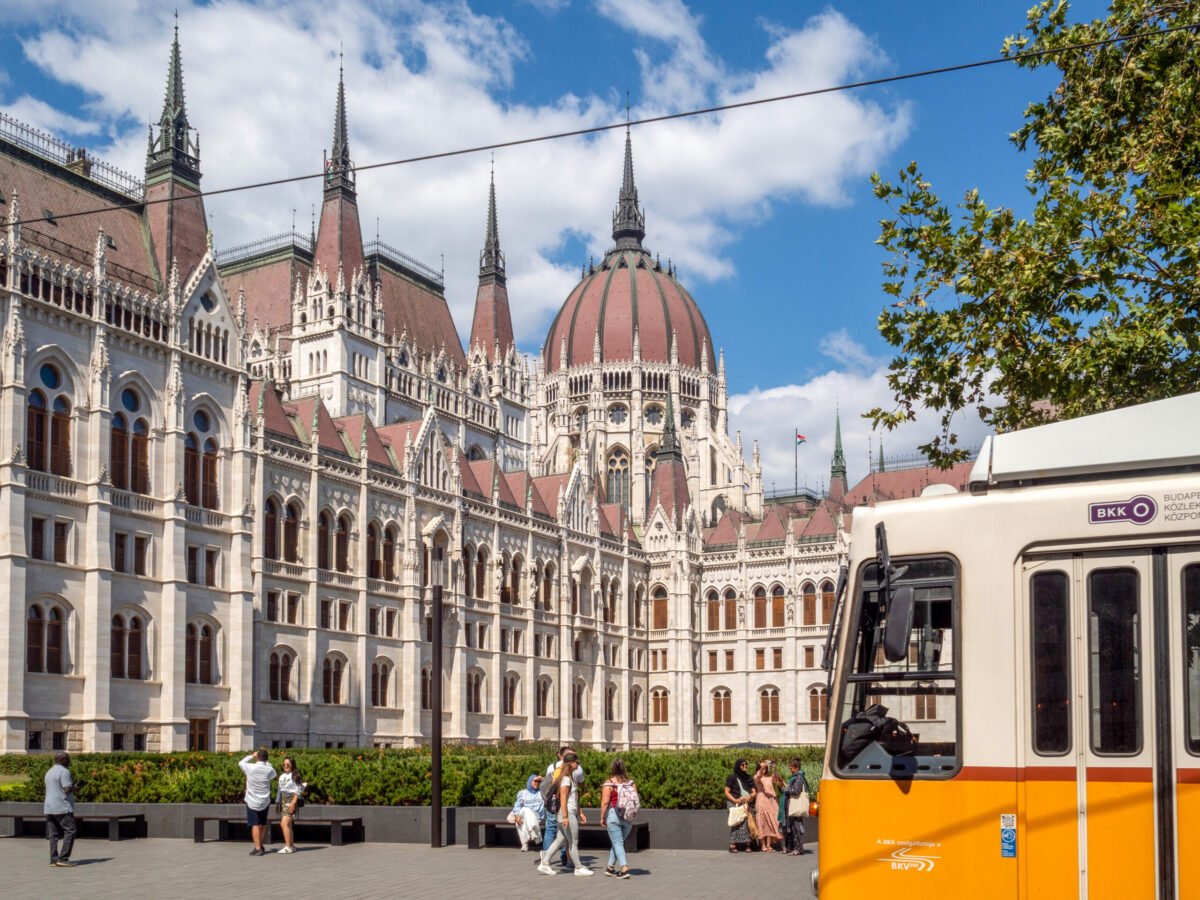
Hungarian Parliament Building
Consistently ranked among the most beautiful buildings in the world, the Hungarian Parliament is no stranger to global recognition – it was even crowned the best tourist attraction in the world in 2023! But Budapest’s most beloved landmark didn’t just appear overnight: it took a full two decades from Imre Steindl winning the design competition in 1883 to the building’s official opening in 1904 – a monumental undertaking built with 40 million bricks, half a million precious stones, and 40 kilograms of gold. Adorned by 365 towers of various sizes, boasting a whopping 242 statues, and reaching a height of 96 meters – a symbolic tribute to the 896 Hungarian conquest, it’s one of Europe’s most captivating seats of government. Although the architect himself never got to see it finished, you can admire his life’s work up close on a 45-minute guided tour taking you through the magnificent Dome Hall, the grand Ceremonial Steps, and face-to-face with the Holy Crown itself.
1055 Budapest, Kossuth Lajos tér 1-3. | Website
St. Stephen’s Basilica
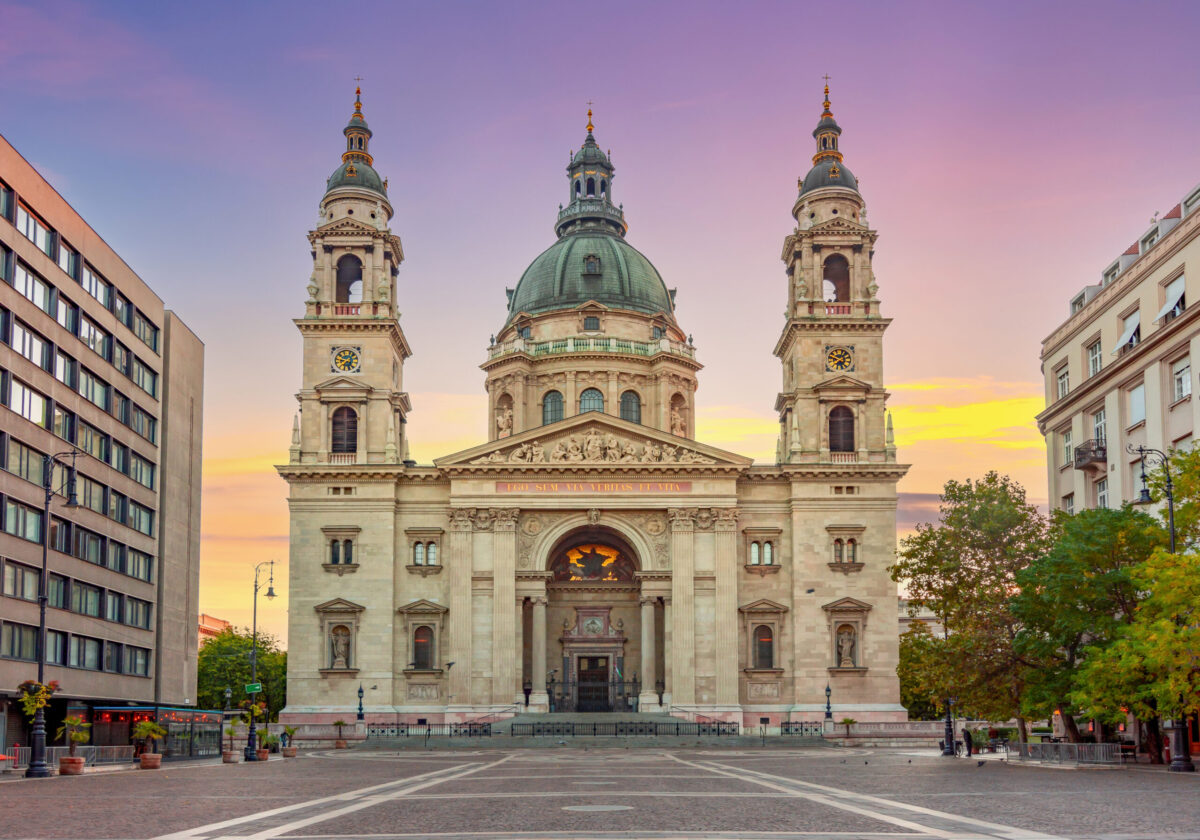
A short walk from the Parliament stands Budapest’s largest church, built as a gesture of gratitude for divine intervention during the catastrophic 1838 flood of Pest, when hundreds sought refuge on the small hill where the church now rises. Named after Hungary’s first Christian king, the sanctuary’s construction began in 1851 under architect József Hild, who envisioned a sweeping neoclassical design. After Hild’s death in 1867, Miklós Ybl took over, adding a touch of Neo‑Renaissance elegance. Then came a major blow in 1868, when the massive dome collapsed, setting the project back by decades. Finally completed by József Kauser in 1906, St. Stephen’s Basilica stands at exactly 96 meters tall, mirroring the Parliament’s height to the centimeter, a deliberate nod to the balance of power between church and state. Visit at your own pace and discover the panoramic lookout and the treasury or grab a ticket to one of the daily organ concerts for a truly unforgettable way to soak in one of Budapest’s grandest interiors.
1051 Budapest, Szent István tér 1. | Website
Hungarian State Opera House
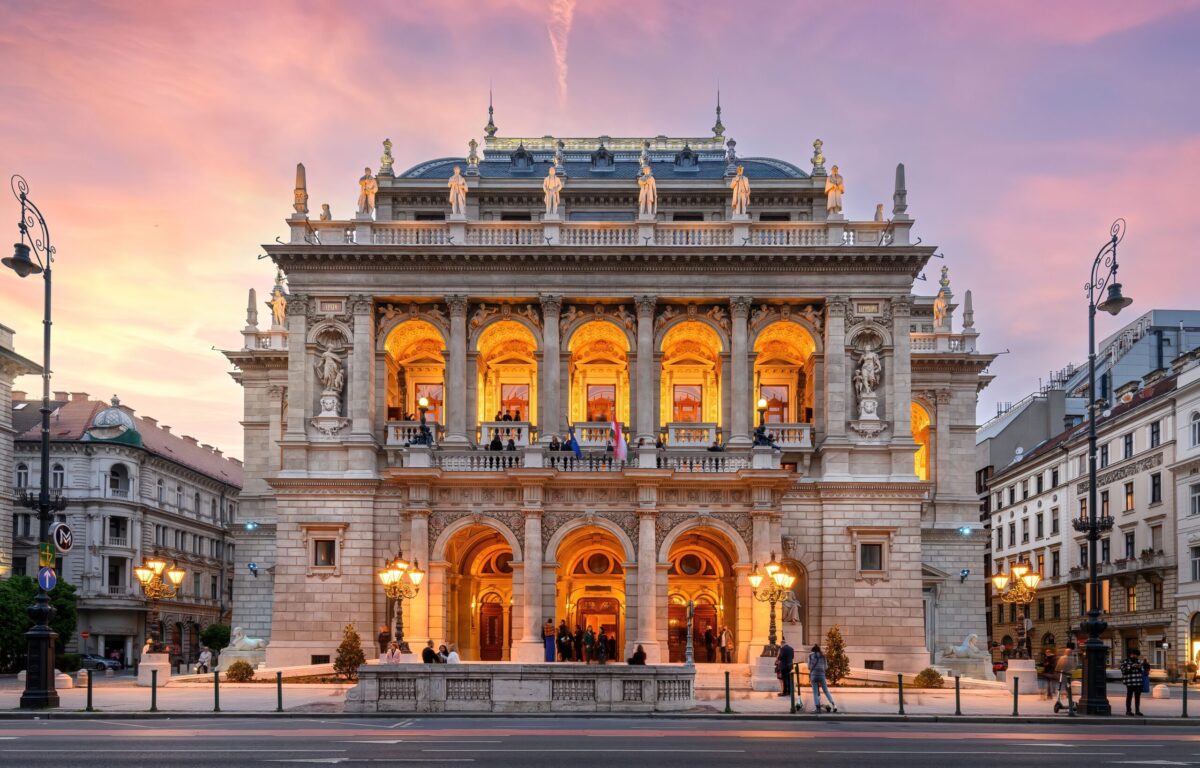
The Hungarian State Opera House is the crowning achievement of Miklós Ybl, the very same architect who reshaped St. Stephen’s Basilica. His Renaissance-inspired design narrowly won a closely contested 1873 competition, beating out Imre Steindl and Vienna’s Ferdinand Fellner. Nine years in the making, the Opera House opened in 1884, its limestone façade adorned with statues of sixteen legendary composers, Mozart, Wagner, Verdi, and Beethoven among them, and monumental figures of Erkel and Liszt flanking the entrance. Step inside and the opulence only deepens: frescoes by Károly Lotz, Mór Than, and Bertalan Székely sweep across the gilded halls, while the marble foyer once left Emperor Franz Joseph himself impressed. Explore the building on a 60-minute guided tour (running daily in English, with occasional tours in Italian, French, Spanish, German, and Greek) or go straight for a front-row seat at one of the world-class productions in the repertoire.
1061 Budapest, Andrássy út 22. | Website
 Funzine